The 369 Scripting Practice: Daily Intention Rhythm for Mindful Focus
Jennie Uyen Chu ·
The 369 Scripting Practice: Daily Intention Rhythm for Mindful Focus
The 369 scripting method is a structured daily habit of writing one clear intention 3 times in the morning, 6 times at midday, and 9 times at night to anchor attention on what matters most. When paired with steady gratitude and practical action, this gentle cadence pulls your mind out of scattered doubt so you can spot real opportunities.
Many readers share that they once tried writing down wishes on paper, only to quit after three days because daily bills and distractions kept pulling their minds backward. Before exploring more reflections inside our mindful reflection journal and the foundational essay on why intentional focus works better than forced wishful thinking, the key truth to remember is that clarity responds to steady rhythm and calm conviction rather than hurried lines scribbled without presence.
How the 369 Writing Cadence Anchors Daily Attention
At its core, this 369 writing practice is a simple focus ritual that uses physical handwriting to bring a wandering mind back to a single priority throughout a busy workday. Combined with real-world follow-through, those three check-ins operate like a personal compass amid constant notifications.
During most waking hours, automatic thought loops drift toward financial stress, tight deadlines, or old memories of falling short. By pausing three brief times—morning, afternoon, and bedtime—to write one present-tense statement, you plant three deliberate cognitive anchors. Behavioral observations on structured positive affirmations note that pairing concrete phrasing with composed emotion trains your attention to notice helpful openings you might otherwise walk right past.
Morning cadence (3 lines): Sets your mental direction while consciousness is quiet, before messages and newsfeeds rush in.
Midday cadence (6 lines): Interrupts afternoon fatigue or reactive multitasking, restoring calm focus during work hours.
Evening cadence (9 lines): Offers a grounded closing message right before sleep, as mental chatter slows and deeper reflection settles.
Why the 3-6-9 Pattern Works Gently With the Brain
Readers researching the background of this habit often encounter references to inventor Nikola Tesla, who famously admired mathematical symmetry and cyclical patterns involving the numbers 3, 6, and 9 in nature. Drawing inspiration from those repeating rhythms, contemporary mindfulness writers adapted the 3-6-9 cadence into a practical discipline tailored for ordinary workdays.
From a practical psychology angle highlighted in studies of expressive writing benefits, the 3, 6, and 9 milestones succeed primarily because they remain realistic. Trying to copy one long sentence 55 times in a row leaves your hand cramped and turns reflection into a race to finish before bed. Splitting the practice into 3 morning lines, 6 midday lines, and 9 evening lines keeps total effort under ten minutes while preserving genuine presence on every stroke.
If you have ever filled pages of notebooks yet quietly doubted whether anything could change, explore the subtle limiting beliefs that undermine intentional goals so you can clear internal friction before starting a fresh writing cycle.
Step-by-Step Guide to Morning, Midday, and Evening 369 Writing
Follow these five straightforward steps to complete a full 33-day practice cycle without losing steam halfway through:
Step 1 — Pick a single core intention: Avoid stuffing career, romance, and health into one sprawling paragraph. Choose one priority for the next 33 days, such as steadier creative income, a supportive workplace, or warmer family communication.
Step 2 — Draft one concise present-tense line: Aim for roughly 12 to 20 words, rooted in appreciation and free of negative framing like "no longer broke" or "done being lonely." State clearly what you are welcoming in.
Step 3 — Write 3 times upon waking: Sit in a quiet corner, take three unhurried breaths so your shoulders drop, and write your sentence carefully 3 times while feeling quiet appreciation.
Step 4 — Write 6 times around midday: Take a three-minute screen break in the early afternoon to write the exact same statement 6 times, steadying your mood through unexpected workday pressures.
Step 5 — Write 9 times before bed: Complete your final 9 lines before turning off the light, close your notebook, release impatience over timing, and allow yourself to rest completely.
Writing slowly with sincere appreciation keeps each line meaningful instead of mechanical repetition.
A 30-Second Body Reset Before Picking Up Your Pen
If you just stepped out of a tense call or rushed through morning chores, pause for thirty seconds before writing a single word. Sit tall with both feet flat on the floor, let your shoulders drop away from your ears, inhale two calm breaths through your nose, and exhale softly through your mouth for six seconds so your phrasing carries steady composure.
Sample 369 Affirmations and Common Mistakes That Stall Progress
An effective line must feel believable to your nervous system today. If you force an unrealistic leap that makes your stomach tighten, your mind quietly rejects the sentence as make-believe. Adjust the tone until it feels both encouraging and grounded.
Goal Area
Helpful 369 Phrasing
Phrasing to Avoid
Finances & income
I am grateful that income from meaningful work flows smoothly and reliably into my account each month.
I hope I stop running short on money or stressing over bills next month.
Career & projects
I welcome fulfilling projects matched to my craft and collaborate with dependable teammates.
I must land a high-paying job tomorrow immediately no matter what.
Love & connection
I cherish an honest relationship where we listen to each other with warmth and mutual respect.
Why has that person still not texted me back today.
Inner calm
I meet each day with steady clarity, calm confidence, and contentment in small steps.
I force myself to act cheerful all day even when exhausted.
Four Common Pitfalls That Slow Momentum
Checking every hour for instant signs: Anxious scoreboard watching broadcasts scarcity rather than trust; read why chasing external outcomes blocks steady alignment to step out of impatience.
Switching topics every three to five days: Constant detours scatter attention before roots form. Stick with one primary line across a 21- or 33-day stretch.
Writing on paper while avoiding practical steps: When a chance to learn, pitch an idea, or have an honest conversation arrives, meet it with real action instead of waiting passively.
Rushing lines like detention lines when irritable: Presence outweighs page count. Three unhurried lines written calmly beat nine rushed lines scribbled in frustration.
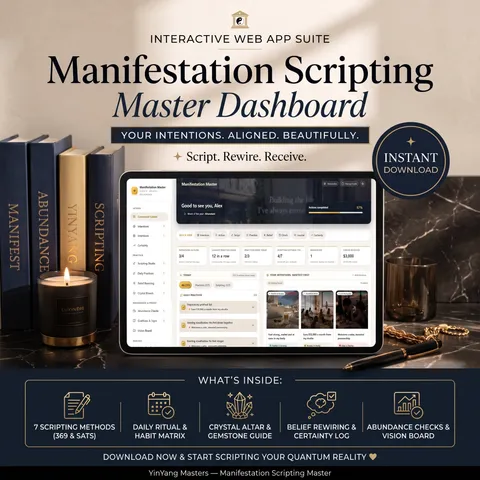
To pair your 3-6-9 cadence with simple morning appreciation, follow our 5-minute gratitude journaling habit to strengthen emotional balance. And if you prefer keeping your 3-6-9 writing cycles, belief reframes, and vision clarity inside one private interactive workspace, explore the Manifestation Scripting & Intention Journal.
Begin tonight with one sincere sentence tailored to your next chapter, write calmly before sleep, and observe how steadier focus shapes your decisions through week one.
Jennie has no separate AI assistant on Claude or ChatGPT; her Yin Yang Masters app is listed there — birth charts, numerology and lucky dates right in the chat.
Little Assistant is Jennie's helper. Every hour she writes a diary note about new posts and videos, plus a calm 3-minute practice. Come say hi at her desk.